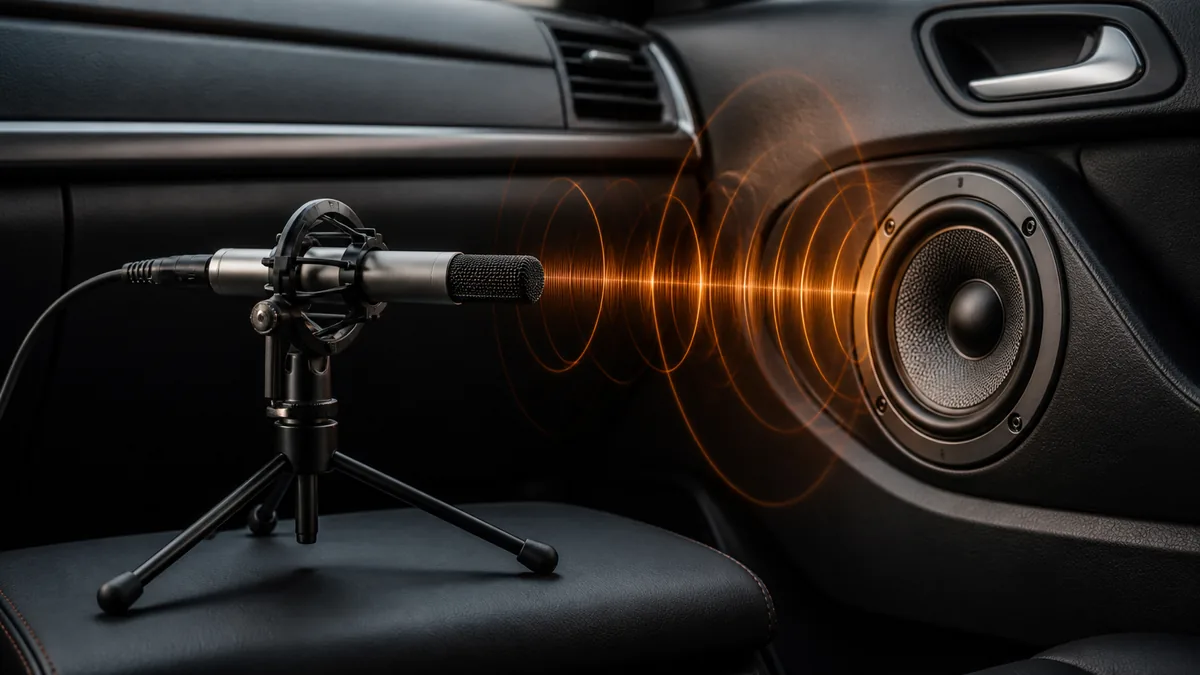
A decibel (dB) expresses a logarithmic ratio. It is not automatically a unit of acoustic loudness, electrical voltage, amplifier power, or speaker sensitivity. The quantity and reference must come from the context.
NIST describes the bel and decibel as units used for logarithmic ratio quantities and notes that 1 dB is one tenth of a bel. That compact definition explains both the usefulness and the most common misuse of dB: the suffix is incomplete when the reader does not know what is being compared.
A ratio needs two quantities
The basic question behind any dB value is:
Relative to what?
Sometimes the reference is explicit in the unit label. Sometimes a specification defines it in nearby text. Sometimes dB expresses only the change between two states, such as the difference before and after an adjustment.
Without the reference and measurement conditions, values from different specifications may not be comparable.
Where dB appears in car audio
| Context | What the number describes | What else you need to know |
|---|---|---|
| Equalizer control | Relative boost or cut around a frequency region | Filter shape, center frequency, bandwidth, implementation |
| Amplifier gain | Ratio between input and output quantities | Which quantities, loading, and measurement conditions |
| Speaker sensitivity | Acoustic output for a stated electrical input and geometry | Input convention, distance, environment, frequency/averaging method |
| Sound pressure level | Acoustic pressure relative to a defined reference | Weighting, time averaging, microphone calibration and position |
| Noise or signal-to-noise ratio | Relationship between wanted signal and noise | Bandwidth, weighting, test level, and method |
The same dB label can therefore appear next to fundamentally different measurements.
Why the scale is logarithmic
Audio systems cover very large ratios. A logarithmic scale compresses those ratios into manageable numbers and makes cascaded gains and losses easier to describe.
This page deliberately does not turn that statement into a setting recipe. Power ratios and amplitude ratios use different mathematical forms, and the amplitude form requires applicable reference conditions. Car Audio Atlas will handle those calculations in tested code before using them in a calculator or procedural guide.
dB is not automatically dB SPL
dB SPL refers to sound pressure level relative to the acoustic reference defined for that measurement system. A plain dB value on an equalizer is normally a relative control value, not a claim that the cabin will produce that many dB SPL.
Likewise, adding a displayed EQ boost does not guarantee an equal acoustic increase at the seat. Output limits, filter interactions, speaker response, cabin behavior, and protection or compression can change the result.
Speaker sensitivity needs its test convention
A sensitivity figure relates acoustic output to a defined input and measurement setup. The number is only meaningful with the convention used by the manufacturer. Specifications may differ in electrical input, distance, bandwidth, or test environment.
That means two sensitivity numbers should not be compared until their conventions are aligned. A larger printed value is not sufficient evidence by itself that one speaker will be louder in a particular vehicle and installation.
Small displayed changes can matter without telling the whole story
A dB difference describes a ratio; it does not directly describe whether a listener will judge the change as obvious, better, or safe. Perception depends on frequency, duration, program material, background noise, hearing, and the specific comparison.
Avoid universal claims such as “this many dB is always twice as loud.” Such statements often mix physical ratios with subjective perception and omit the measurement reference.
A checklist for reading any dB specification
Before using the number, identify:
- the measured quantity;
- the reference quantity or baseline;
- whether the figure is a level or a change;
- frequency range, bandwidth, or weighting;
- averaging or time window;
- test environment and sensor position;
- any product-specific conditions.
If those details are absent, treat the number as incomplete rather than filling the gaps with assumptions.
What is confirmed and what varies
Confirmed: the decibel expresses a logarithmic ratio and must be interpreted with the relevant quantity and reference.
Variable: how a manufacturer measures sensitivity, noise, maximum output, or control range; how a cabin and listener respond; and what level is appropriate for a particular use.
Continue with audio frequency to understand what the horizontal axis of many dB graphs represents, then use the signal-path guide to locate where a gain or loss occurs.
Last verified: August 22, 2026.